Expired Patents and Generics: What a Landmark Ruling Means for Innovators
A landmark ruling on expired patents just reshaped how generics enter the market. Here's what innovators, inventors, and IP owners need to know now.
Imagine spending 20 years and hundreds of crores developing a drug, only to watch competitors line up at the starting line — legally allowed to copy your formula the moment the clock hits zero. That's the reality of patent expiry. But a recent high-profile ruling has pushed this conversation into sharper focus, raising a question every inventor and IP owner should care about: what protections actually survive after a patent expires, and what doesn't?
If you own patents, file them, or build products around protected inventions, this matters. The ruling on expired patents and generics clarifies how courts view post-expiry rights, pre-expiry generic activity, and the limits of trying to stretch patent life. In this post, you'll learn exactly what changed, why it changed, and how it affects innovators, generic manufacturers, and anyone navigating the IP pipeline today.
The Background: Why This Ruling Happened
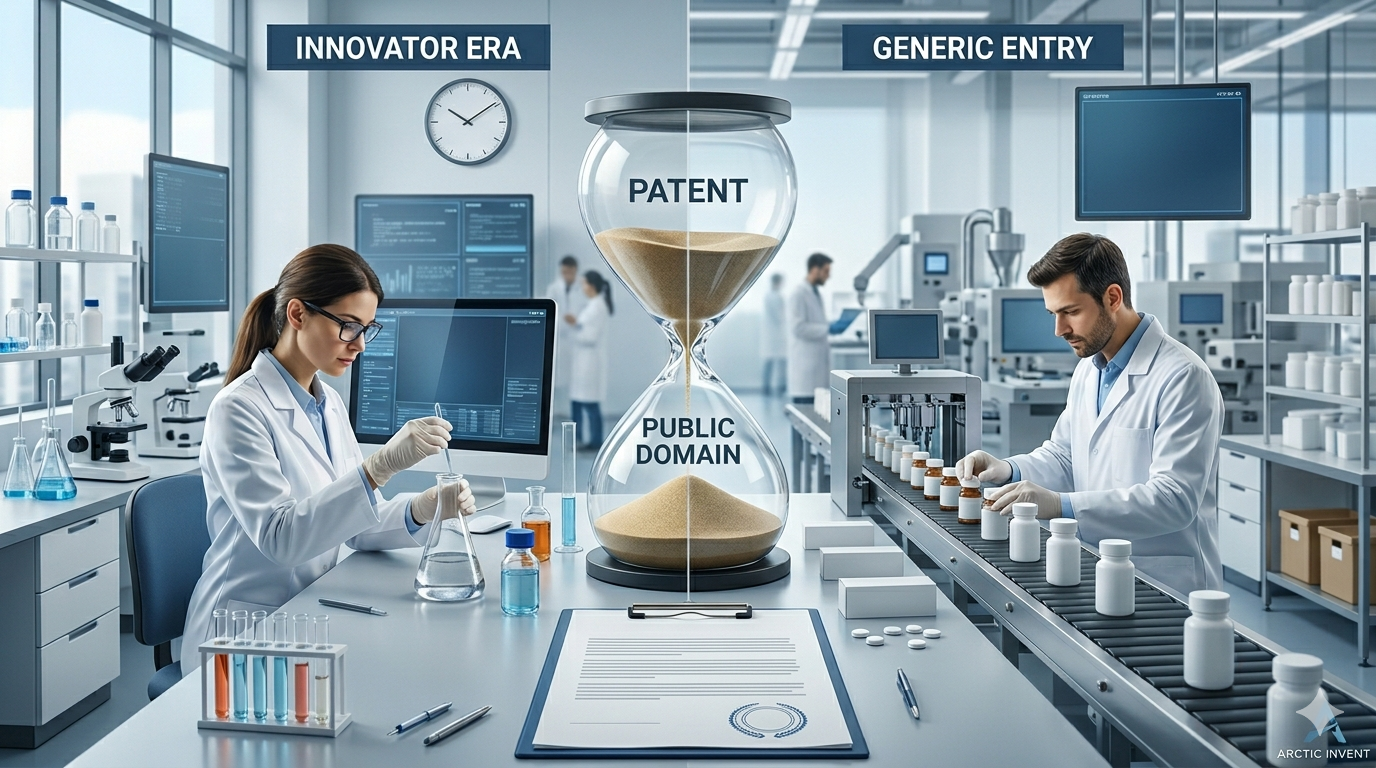
Patents are a simple bargain. You disclose your invention to the world, and in return you get a 20-year monopoly to make, use, and sell it. After those 20 years, the invention belongs to the public. Anyone can make a generic version. That's the deal — and it's the deal that fuels both innovation and affordable access.
But in practice, things get messy near the expiry date. Generic manufacturers want to launch the moment the patent expires — sometimes even earlier — so they prepare manufacturing, seek regulatory approvals, and stock inventory ahead of time. Patent owners, understandably, try to stop this. They file injunctions. They argue that any pre-expiry activity is infringement. Some go further and try to extend protection through minor modifications — a practice often called evergreening.
The case that triggered this ruling sat right in the middle of that tension. A patent holder sought to block a generic competitor from preparing to enter the market as the patent neared its end. The court had to answer a fundamental question: how far can a patent owner's rights stretch, and what is the generic manufacturer entitled to do before the patent actually expires?
The answer reshaped how everyone — from pharmaceutical innovators to biosimilar developers to agrichemical inventors — should think about the final years of a patent's life.
What the Court Actually Said
The ruling made several things crystal clear, and they all point in one direction: a patent's power ends when it expires — no extensions, no workarounds, no creative interpretations.
Key Takeaways from the Ruling
- Pre-expiry preparation is allowed. Generic manufacturers can use the patented invention for regulatory and research purposes before the patent expires, so long as it's for the purpose of being ready to launch after expiry. This is often called the "Bolar exemption."
- Courts will not grant injunctions that extend beyond the patent term. If a patent expires next month, a court isn't going to block a generic launch that happens the day after expiry.
- Export and commercial sale during the patent term is still infringement. Preparing to launch is fine. Actually selling or exporting the product while the patent is live is not.
- Evergreening attempts will face strict scrutiny. Trying to stretch protection by filing incremental patents on minor tweaks won't automatically buy more time.
In short, the court drew a bright line. Before expiry: full protection. After expiry: public domain. And the space between — the pre-expiry preparation window — belongs to generic manufacturers as long as they don't actually commercialize the product until the patent ends.
What Happens When a Patent Expires
This part trips up a lot of first-time inventors. So let's break it down in plain language.
The Moment a Patent Expires
The day after your patent term ends, the invention is free for anyone to use. There's no grace period for the patent owner. No extension based on how much was spent developing it. No special treatment for complex inventions. It's over.
Here's what that actually means in practice:
- Anyone can manufacture the product. The technical teachings in your patent are now open knowledge.
- Anyone can sell it. No royalties owed, no permission required.
- Anyone can improve on it. Though improvements themselves might be separately patentable by whoever makes them.
- You lose exclusivity, but not your reputation. Your brand, trademark, and market goodwill don't expire with the patent.
What Survives After Expiry
Not everything ends. Several forms of IP can continue to protect your commercial interests:
- Trademarks on the product name or branding can last forever as long as you use and renew them.
- Trade secrets covering manufacturing know-how, formulations, or processes never expire as long as you keep them secret.
- Copyrights on packaging, labeling, and marketing materials remain intact.
- Regulatory data exclusivity — where applicable — can delay generic approval even after the patent lapses.
This is why smart IP owners don't put all their protection into a single patent. They layer it.
Impact on Patent Owners and Innovators
If you're an innovator, the ruling is a reminder: your patent is a ticking clock, and the clock is loud. You can't rely on last-minute legal maneuvers to extend your window. You have to plan for expiry from day one.
What This Ruling Means for You
- Launch earlier, monetize harder. Every year you delay commercialization is a year of exclusivity you'll never get back. File early, launch fast, and extract value during the protected window.
- Build a patent portfolio, not a single patent. One patent on the core molecule is not enough. File on formulations, delivery methods, manufacturing processes, and new uses. Each layer adds protection at different timelines.
- Invest in trade secrets alongside patents. Patents expire. Trade secrets don't. Your manufacturing optimizations, know-how, and production tricks can give you a lasting edge even after the core patent lapses.
- Prepare for generic competition 3–5 years before expiry. Lower prices, secure long-term supply contracts, invest in brand loyalty, and pipeline the next-generation product.
The Hard Truth About Patent Cliffs
A "patent cliff" is what happens when a product loses 80–90% of its revenue within a year of patent expiry. It's brutal, it's predictable, and it's avoidable only with smart lifecycle planning. This ruling underscores that the cliff is real and courts won't build you a bridge across it.
Impact on Generic Manufacturers
For generic manufacturers, the ruling is a green light — but with guardrails.
What You Can Now Do with Confidence
- File regulatory approvals before patent expiry. You can submit applications, conduct bioequivalence studies, and complete all the paperwork needed for launch.
- Manufacture test batches for regulatory purposes. Producing samples to satisfy approval requirements is not infringement.
- Stockpile inventory for post-expiry launch. This is a grey area in many jurisdictions, but the ruling leans toward allowing preparation, provided actual sale waits until after expiry.
- Plan marketing and distribution channels in advance. Nothing stops you from lining up buyers, distributors, and logistics — as long as no commercial sale happens during the patent term.
What Still Counts as Infringement
Generic manufacturers shouldn't read the ruling as a free-for-all. These activities still cross the line:
- Selling or exporting the product before patent expiry — even to markets where the patent doesn't apply, if the manufacturing happens in a patent-protected country.
- Launching ahead of expiry based on a bet that the patent will be invalidated later.
- Copying protected improvements or formulations that are covered by separate, unexpired patents.
The rule of thumb: prepare freely, sell only after the patent clock runs out.
The Evergreening Problem This Ruling Addresses
Evergreening is when a patent owner tries to extend exclusivity beyond the original 20 years by filing new patents on minor variations — a slight change in crystal form, a new dosage, a combination with another drug, or a new indication. Done honestly, these are legitimate innovations. Done cynically, they're just ways to lock out competition.
Why Courts Are Cracking Down
Courts across jurisdictions have grown skeptical of evergreening because it undermines the public bargain at the heart of patent law. You got 20 years. You used them. Now the public gets its turn.
The ruling signals that:
- Incremental patents will face higher scrutiny. Courts want to see genuine inventive step, not just a cosmetic tweak.
- Secondary patents won't automatically block generics. Even if you have a newer patent on a formulation or combination, generics can still launch the original molecule after the base patent expires.
- Strategic litigation to delay generics will be viewed skeptically. Filing last-minute injunctions without strong legal grounds can backfire.
The Honest Way to Extend Your Advantage
You can still extend your competitive position — legitimately — by investing in:
- Next-generation versions that offer real therapeutic or functional improvements
- New delivery mechanisms with genuine patient benefit
- Combination products that create new clinical value
- Strong trademarks and brand equity that outlast any patent
The difference between evergreening and legitimate innovation is simple: one creates real value, the other just creates delay.
How This Compares Globally
The direction of this ruling fits a broader global pattern. Around the world, courts and patent offices are tightening the boundaries of patent protection near and after expiry.
The Bolar Exemption — A Global Standard
Most major jurisdictions recognize some version of the Bolar exemption, which allows generic manufacturers to prepare for market entry before patent expiry without being sued for infringement. The specifics differ, but the principle is consistent: regulatory preparation is not the same as commercial exploitation.
Patent Linkage Varies Widely
In some countries, regulatory authorities will not approve a generic while a patent is still in force — a system called patent linkage. In others, no such linkage exists, which means generics can receive approval before patent expiry and launch immediately after. Understanding which system applies in each of your target markets is essential before making any launch decisions.
Data Exclusivity — A Separate Shield
Some jurisdictions offer data exclusivity — protection for the clinical trial data submitted during approval — separate from the patent itself. This can delay generic approval for 5–10 years, even after the patent expires, in markets that recognize it. For now, this varies heavily by country and product category.
The takeaway: if you're building a global IP strategy, you can't assume the same rules apply everywhere. Each market has its own mix of patent protection, regulatory exclusivity, and post-expiry rules.
The IP Strategy Shift Innovators Need to Make
If there's one big takeaway from this ruling, it's that patents alone are not an IP strategy. They're one tool in a toolkit. And the tool has a hard expiration date.
What Smart Innovators Do Differently
- Start IP planning at the idea stage. Don't wait until you have a product. Map out what you'll patent, what you'll keep as a trade secret, and what you'll trademark before you ever file the first application.
- File a family of patents, not just one. Base compound, formulation, process, use, combination — each is a separate patent with its own lifespan.
- Invest in brand and trademark early. When your patent expires, your brand is what keeps customers choosing you over a cheaper generic.
- Layer regulatory protections where available. Data exclusivity, orphan drug designations, and similar mechanisms can buy additional years of exclusivity in the right markets.
- Plan the post-expiry phase explicitly. What's your pricing strategy? Do you have a follow-on product ready? Can you move into authorized generics? Build the plan years ahead.
The Inventor's Mindset Shift
Old mindset: "My patent protects me for 20 years."
New mindset: "My patent gives me a 20-year runway to build something — a brand, a product line, a follow-on innovation, a trade secret moat — that will keep protecting me after the patent is gone."
That shift is what separates innovators who thrive through patent expiry from those who get wiped out by it.
Frequently Asked Questions
Can generics be manufactured before a patent expires?
Yes, but only for regulatory preparation — not commercial sale. Generic manufacturers can produce test batches, conduct bioequivalence studies, and file for regulatory approval before the patent expires. This is protected under what's commonly called the Bolar exemption. However, actually selling or exporting the product before expiry still counts as infringement.
What happens to a product the day after its patent expires?
The invention enters the public domain immediately. Anyone can manufacture, sell, or improve the product without paying royalties or seeking permission. However, trademarks, trade secrets, copyrighted materials, and — where applicable — regulatory data exclusivity can continue to protect parts of the business even after patent expiry.
Can a patent holder stop a generic launch scheduled after patent expiry?
No. Courts will generally not grant injunctions that extend protection beyond the actual patent term. If a generic manufacturer plans to launch the day after expiry, the patent holder cannot use litigation to delay that launch. Preparation during the patent term is legally permitted for regulatory purposes.
What is evergreening and why is it problematic?
Evergreening is the practice of filing secondary patents on minor modifications — like new formulations, dosages, or combinations — to extend exclusivity beyond the original 20-year term. Courts increasingly view this skeptically because it delays public access without adding genuine innovation. Legitimate improvements with real therapeutic value remain patentable.
How can innovators protect their product after the patent expires?
Layer your IP from the start. Use trademarks to protect brand identity permanently, keep manufacturing know-how as trade secrets, file copyrights on packaging and marketing, and build next-generation products with their own patent protection. Strong brand equity and regulatory data exclusivity can also extend competitive advantage long after the base patent lapses.
Does this ruling apply only to pharmaceuticals?
No. While the case involved a pharmaceutical patent, the principles apply to all patented inventions — including agrichemicals, biotech products, medical devices, and industrial technologies. Any industry where patent expiry creates immediate generic or copycat competition should treat this ruling as a blueprint for post-expiry rights.
Treat Your Patent as a Runway, Not a Destination
The ruling on expired patents and generics isn't just legal news — it's a wake-up call for every innovator. Your patent is powerful, but it's temporary. Courts won't stretch it. Competitors are preparing to launch the moment it ends. And trying to game the system through evergreening or last-minute injunctions is getting harder every year.
Treat your patent as a runway, not a destination. Use those 20 years to build a brand, layer your IP, lock down trade secrets, and develop the next innovation that will keep you ahead even after the original protection ends. Innovation is a moving target — and so is the protection around it.